


The Role Proper Insulation Plays in Preventing Frozen Pipes
You’re looking at leaks, water damage, and a major headache if your pipes freeze during the winter. Proper insulation is one of the simplest ways to keep water flowing and avoid a plumbing disaster.
For over 60 years, Goodman Plumbing has helped local residents protect their homes by preventing freezing pipes before winter storms hit.
Let’s break down exactly how insulation works and what you can do to avoid a plumbing emergency.
TL;DR
Frozen pipes can burst and cause expensive damage in Philadelphia, Bucks, and Montgomery County. Proper insulation protects pipes in vulnerable areas, combined with draft sealing and consistent heat.
Key Takeaways
- Pipes freeze below 32 degrees
- Insulate attics, basements, crawl spaces, and exterior walls
- Seal drafts and maintain indoor heat
- Use heat tape for extra protection
- Call a licensed plumber for emergencies
Why Pipes Freeze in Winter
Pipes freeze when the surrounding air gets cold enough to bring the water inside them below 32 degrees. In the Philadelphia region, even moderately cold weather overnight can bring conditions that allow pipes in uninsulated areas to freeze.
When water freezes, it expands. This puts tremendous pressure on pipe walls. Even a small crack can become a burst pipe, leading to flooded floors, damaged cabinets, ruined walls, and expensive repair bills.
Why does this happen?
Pipes in unheated spaces like attics, exterior walls, and crawl spaces are particularly vulnerable because they don’t benefit from the home’s internal heating. When those areas shed heat too quickly, the water inside the pipes follows suit.
Goodman Plumbing technicians often see calls from Bucks and Montgomery County homeowners after cold snaps when pipes in uninsulated exterior walls or basements freeze without warning.
How Proper Insulation Helps Prevent Frozen Pipes
Insulation creates a barrier that slows heat loss from pipes. It doesn’t just cover them, it keeps the warmer indoor air around the plumbing lines longer and reduces the impact of frigid outdoor temperatures.
Here’s how it works:
- Thermal protection: Insulation slows down the transfer of heat away from the pipe, helping water stay above freezing longer.
- Buffer against cold drafts: Pipes near windows, exterior walls, or poorly sealed openings benefit most when insulation blocks chilled airflow.
- Gives you time: Even if temps drop low, well-insulated pipes cool more slowly, giving you a chance to notice issues before they freeze.
Pro experience: In Philadelphia area homes, pipes running under uninsulated floors or near drafty exterior walls are most prone to freezing.
Where Pipes Are Most at Risk
Certain parts of your home are much more likely to experience freezing issues, including:
Basements
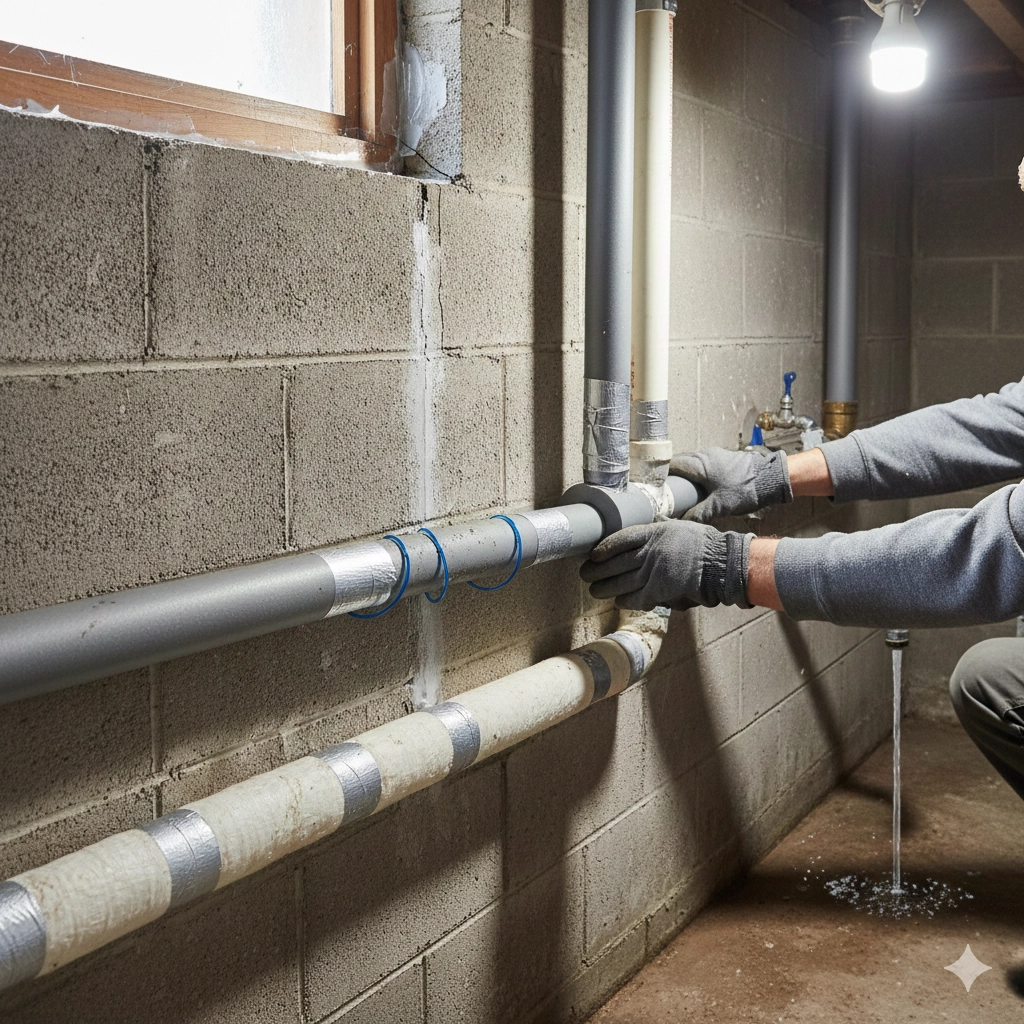
Basements may seem warm compared to outdoors, but areas near exterior walls or windows can still get cold enough to freeze water lines that run along them.
Attics and Crawl Spaces
These areas are often unheated and poorly insulated. Pipes here are directly exposed to cold air that seeps in because the building envelope (walls and roof) isn’t fully sealed.
Exterior Walls
Water supply lines inside walls facing the outside world lose heat quickly, especially in older homes with thin wall cavities or inadequate insulation.
Utility Closets and Garages
Pipes in corners of the home that aren’t part of the main heated living area are common trouble spots. These areas often lack sufficient warm air flow, making insulation essential.
Signs Your Pipes Might Be At Risk
Here are some common indicators that frozen or freezing pipes could be a problem:
- Visible frost on exposed pipe sections
- Chilly spots near exterior walls
- Slow water flow during cold weather
- Noisy pipes that rattle or bang in winter
- History of freezing problems in your home
Homeowners served by Goodman Plumbing frequently mention these symptoms right before a visit. In many cases, insulation was missing or poorly installed.
How to Insulate Pipes the Right Way
Proper insulation doesn’t have to be complicated, but it does need to be done right:
1. Choose the Correct Insulation
- Foam sleeves: Easy to install on straight runs of pipe.
- Fiberglass wrap: Good for pipes in irregular spaces or near heat sources.
- Spray foam: Excellent for sealing gaps around exterior wall plumbing.
2. Cover Every Inch
Even small gaps can let cold air reach the pipe. Make sure insulation pieces fit tightly with no voids.
3. Secure the Insulation
Use tape or clamps to hold the insulation snug, so it doesn’t slip over time.
4. Consider Heat Tape for Vulnerable Areas
Heat cables add an extra layer of protection in especially cold zones like crawl spaces or exterior walls, where insulation alone might not suffice.
Extra Steps to Protect Your Pipes
While insulation is one of the best defenses against freezing pipes, you can boost protection with other strategies:
- Seal drafts around windows and doors to keep cold air from creeping into wall cavities.
- Keep interior temperatures consistent during cold weather, even in rooms you don’t use often.
- Let faucets drip slightly during extreme cold snaps because moving water freezes more slowly.
- Open cabinet doors under sinks to let warm room air circulate around pipes.
For maximum protection against harsh Philadelphia winters, Goodman Plumbing professionals recommend combining multiple methods like insulation, air sealing, and temperature control.
What to Do If a Pipe Freezes
Sometimes freezing happens despite your best precautions. If you suspect a frozen pipe:
- Shut off the water supply to prevent pressure buildup and potential bursts.
- Warm the pipe safely with a hair dryer or heating pad – never use open flames.
- Open nearby faucets so melting water can flow and reduce pressure.
- Call a local professional if the pipe doesn’t thaw quickly or if you see signs of damage.
FAQs
Can insulation completely stop pipe freezing?
Insulation greatly reduces the risk, but isn’t a 100% guarantee. Pipes can still freeze if home temperatures drop very low or if drafts are severe. In these cases, the best protection comes from combining insulation with sealing cold air leaks and adding heat tape for the vulnerable pipes.
What should I do if a pipe freezes despite insulation?
First, shut off the water supply to prevent pressure buildup and a potential burst. Then, gradually apply heat using a hair dryer or heating pad (never an open flame). Open nearby faucets to allow melting water to flow and relieve pressure.
Should I call a professional to insulate my pipes?
Homeowners can insulate accessible pipes, but for ones that are hidden or hard-to-reach, a professional is recommended. A licensed professional, like our team at Goodman Plumbing, will identify all at-risk pipes to ensure proper insulation and combine it with other preventive measures.
What’s the best insulation material for pipes?
Foam pipe sleeves are easy to install and work well for most exposed pipes. Fiberglass wrap is better for irregularly shaped or hard-to-reach pipes, while spray form is ideal for sealing pipes inside wall cavities or around drafty areas.
What to Do to Prevent an Emergency
Take 15-20 minutes to inspect any pipes near exterior walls, often found in crawl spaces and basements. If you notice drafts or missing insulation, it’s time to act.
For professional insulation and expert assessment, contact Goodman Plumbing. Their Master Licensed Plumbers have been serving Philadelphia, Bucks County, and Montgomery County for over 60 years.
Contact us today!