


The Homeowner’s Guide to Energy-Efficient Air Conditioners
If your home in Philadelphia or Trevose isn’t staying cool, the problem may not be how you’re using your AC. It may be what you’re running. Older, inefficient systems work harder than they need to. In our region’s humid summers, that difference shows up on your utility bill.
Goodman Plumbing has been installing and servicing air conditioning systems across Philadelphia, Bucks, and Montgomery County since 1956. We’ve helped tens of thousands of local homeowners make smart decisions about their cooling equipment. From understanding efficiency ratings to choosing the right system, this guide covers everything you need to know before upgrading.
TL;DR
Choosing an energy-efficient air conditioner for your Philadelphia-area home involves understanding SEER2 ratings, matching system size to your square footage, and selecting the right type of system for your layout and budget.
Key Takeaways
- High-efficiency air conditioners with strong SEER2 ratings reduce monthly energy costs
- An oversized or undersized unit wastes energy and shortens system life
- The most common types of AC systems in the Philadelphia area are central air, heat pumps, mini-splits, and window units
- Most systems last 10–15 years
- Installation typically takes one to two days for most residential systems
What Makes an Air Conditioner “Energy-Efficient”?
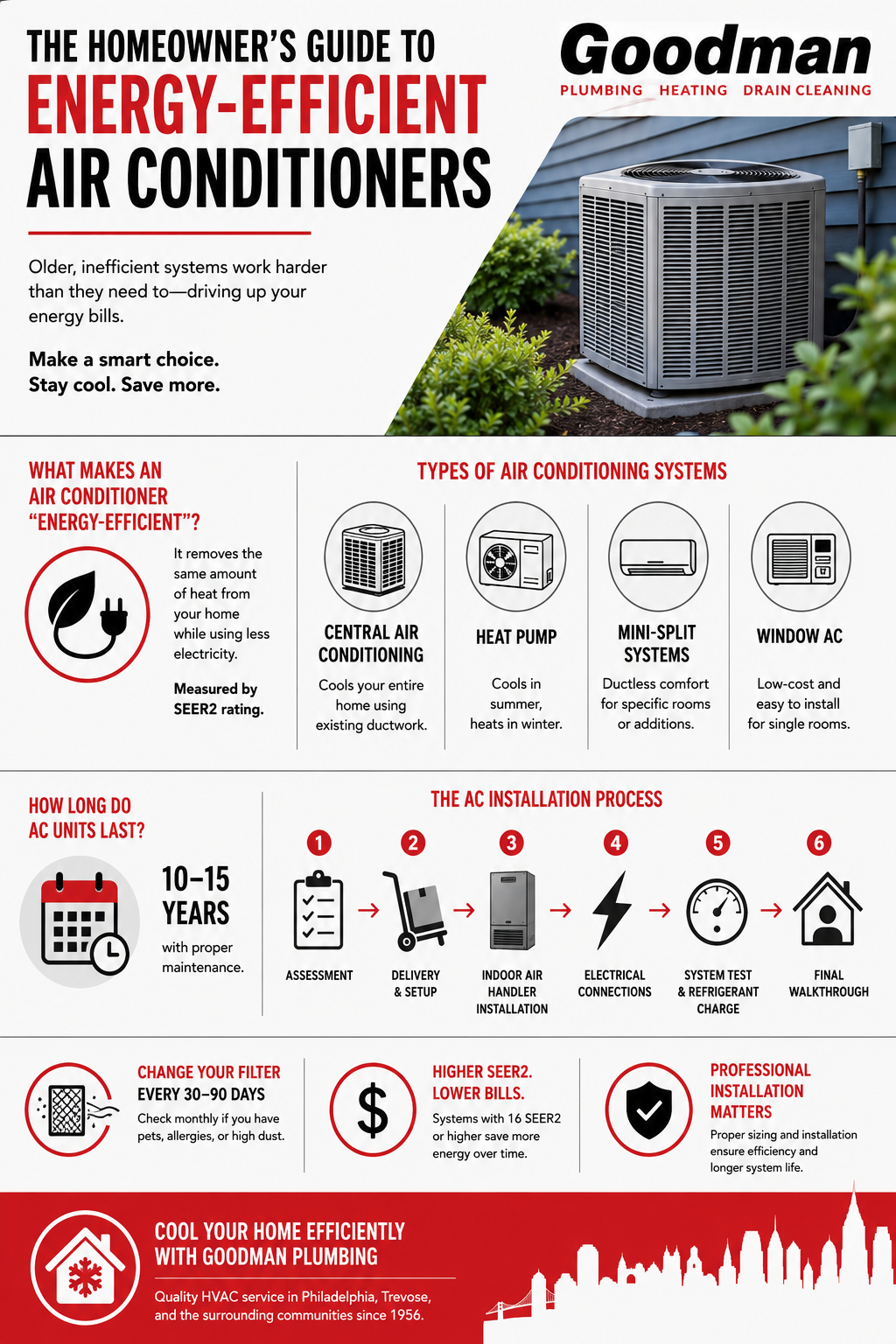
An energy-efficient air conditioner removes the same amount of heat from your home while using less electricity to do it. The primary measure of that efficiency is the SEER2 rating (Seasonal Energy Efficiency Ratio 2), which replaced the older SEER standard in 2023.
Types of Air Conditioning Systems
Central Air Conditioning
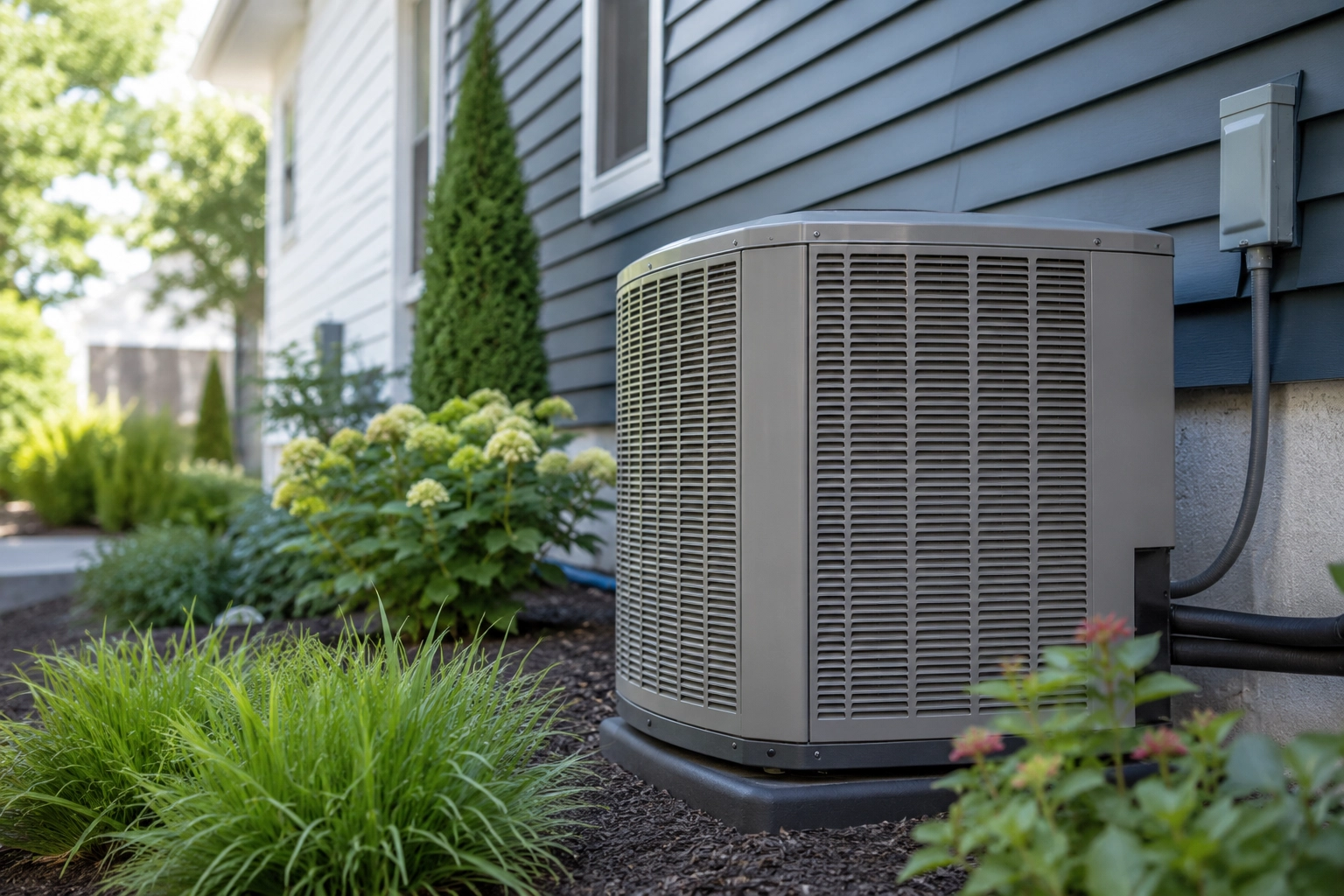
The most common system in Philadelphia-area homes. A central air conditioner uses a single outdoor unit and your existing ductwork to cool the entire house. It’s the most cost-effective option when your ductwork is already in place and in good condition.
Heat Pump
A heat pump works like a central air conditioner in summer but reverses in winter to provide heating as well. In the heat pump vs. central air comparison, heat pumps are more efficient for heating than gas furnaces when temperatures stay above freezing.
Mini-Split Systems
Mini-splits (also called ductless HVAC systems) are ideal for homes without existing ductwork, additions, finished basements, or rooms that never cool properly with central air. Each zone has its own air handler for precise temperature control.
Window AC
Window units are low-cost and easy to install, but the window AC vs. central air comparison isn’t flattering for window units in whole-home applications. They’re inefficient at scale, require window access in every room, and don’t filter or dehumidify air as effectively.
How Long Do AC Units Last?
Most residential AC units last 10–15 years, with some well-maintained units reaching 20 years. Several factors affect that lifespan:
- Annual AC maintenance
- Installation quality
- Local climate
The AC Installation Process: What Happens on Install Day
Many homeowners are surprised by how smooth the process is when it’s handled by experienced AC installation contractors. Here’s what install day with Goodman Plumbing looks like:
- Pre-installation assessment
- Equipment delivery and setup
- Indoor air handler installation
- Electrical connections
- Refrigerant charge and system test
- Final walkthrough
How Long Does AC Installation Take?
For a standard central air replacement, most installations are completed in a single day. More complex installations may take two days. We’ll give you a clear timeline upfront and always arrive on time.
FAQs
What SEER2 rating should I look for in a new air conditioner?
We recommend a minimum of 16 SEER2. The energy savings from a 16 or 18 SEER2 system add up significantly over a 10–15 year lifespan. Per ENERGY STAR, an air conditioner rated 17 SEER2 or higher also qualifies for a federal tax credit of up to $600 under the Inflation Reduction Act.
How often should I replace my air conditioner filter?
Air conditioner filter replacement should happen every 30–90 days. Households with pets, high dust levels, or family members with allergies should check filters monthly.
Is a heat pump a good choice for Philadelphia summers?
Yes, heat pumps perform well in most homes in this region. Goodman Plumbing installs heat pumps throughout the Philadelphia and Trevose area, and our team can tell you quickly whether your home is a strong candidate during a free estimate.
How do I know if I need a new AC or just a repair?
If your system is under 10 years old, repairs are usually worth it. If it’s over 12–15 years old and facing a significant repair cost, replacement typically makes more financial sense, especially when you factor in the energy savings of a modern, energy-efficient air conditioner.
Cool Your Home Efficiently with Goodman Plumbing
Whether you’re comparing types of air conditioning systems, working through your AC replacement cost, or ready to move forward, Goodman Plumbing is ready to help.
Since 1956, our second-generation company has served Philadelphia, Trevose, and the surrounding communities with quality HVAC work backed by a 1-year parts and labor warranty. Call now to schedule your free in-home estimate!